
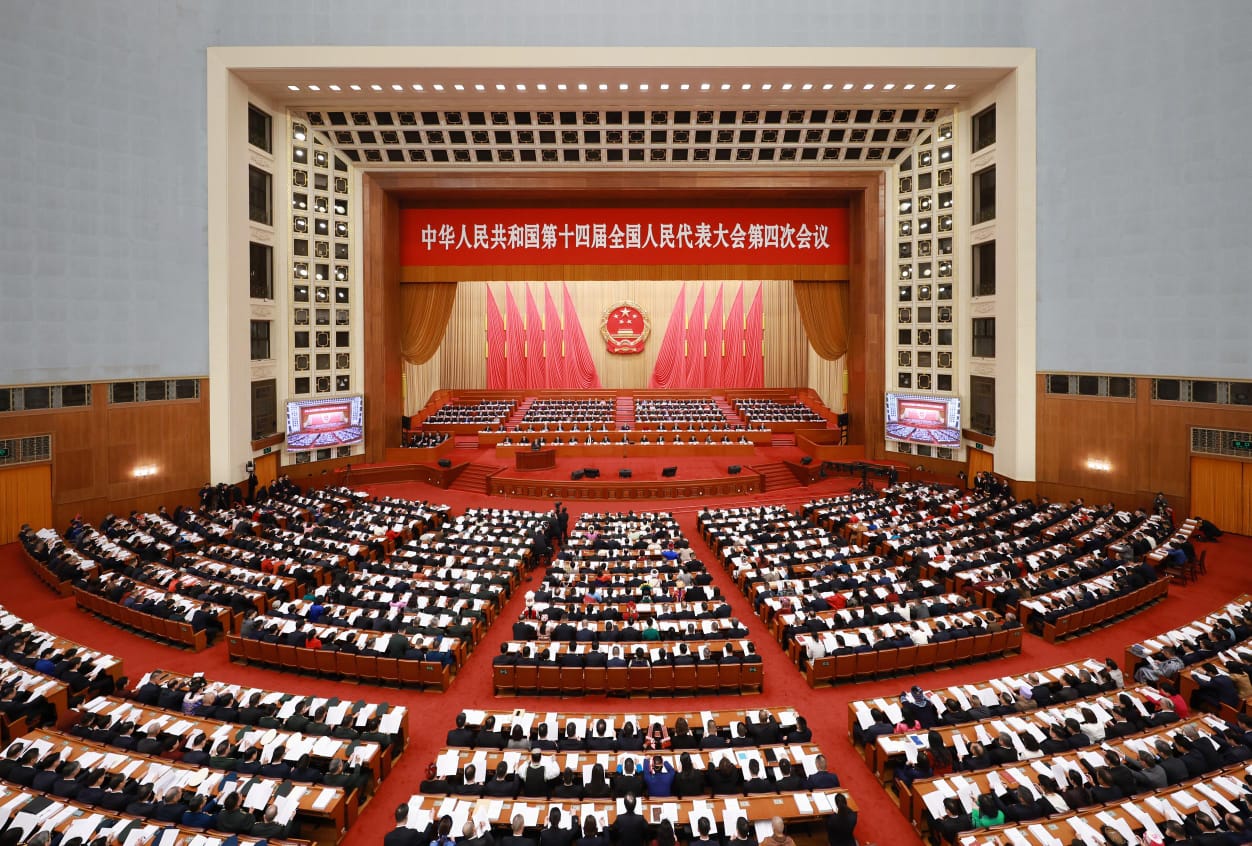

As “Two Sessions” of China’s parliament and top political advisory body convene in Beijing, the moment presents an opportunity not only for understanding China’s domestic policy direction but also for assessing governance practices elsewhere.
Legislating for transformation
The National People’s Congress (NPC) operates as China’s highest legislative body within a centralized governance structure, reviewing national laws, approving budgets, and endorsing development plans.
The Chinese People’s Political Consultative Conference (CPPCC) complements this process by incorporating representatives from various sectors like academia, business, and social organizations into structured consultation.
This year’s sessions carry additional significance as 2026 marks the opening year of China’s 15th Five-Year Plan (2026-2030) period. More than a development blueprint, China’s five-year plans are real life commitments to towards the goal of realizing socialist modernization by 2035 and building China into a great, modern socialist country in all respects by the middle of the century.
It is this nexus between legislation, long term planning and national development about China’s system that legislative bodies elsewhere in the Global South need to study.
How the National Development and Reform Commission (NDRC) leverages policy making to drive state resources to key sectors such as technology, energy security and Artificial Intelligence (AI).
It is this synergy that has enabled stability and achievements in infrastructure, poverty reduction and industrial growth in China. It is the result of policy continuity, harmony and coordination.
Election cycles
China’s political system closely links governance with people’s needs and long-term development while paying attention to China’s unique realities and complexities.
Legislative bodies in the Global South should plan and see beyond short election cycles and narrow political and ideological contestations. China’s approach emphasizes consultation and consensus-building with a strong focus on results.
Most Global South countries operate multiparty systems where parliaments are mandated to legislate, oversee the executive, and represent citizens’ interests. But challenges such as slow decision making and ideological conflict are pervasive and public trust and confidence in lawmakers and lawmaking institutions is falling fast. This is an indicator of the failure of legislation to align with public interest and expectations.
Potentially transformative projects or blueprints suffer; sometimes fail from a lack of robust institutional oversight and prioritization. Policy making is disrupted every four or five years by elections and attendant political instability.
While it cannot be replicated whole for obvious reasons, the Chinese model illustrates how aligning annual legislative processes with long-term development strategies can strengthen predictability and policy stability.
Lawmaking bodies in the Global South should borrow and adapt those transferable governance principles that are fit for purpose.
Diana Ayero and Patience Anyango are Research Fellows at AfIBR

