


Author: Ronald Kato
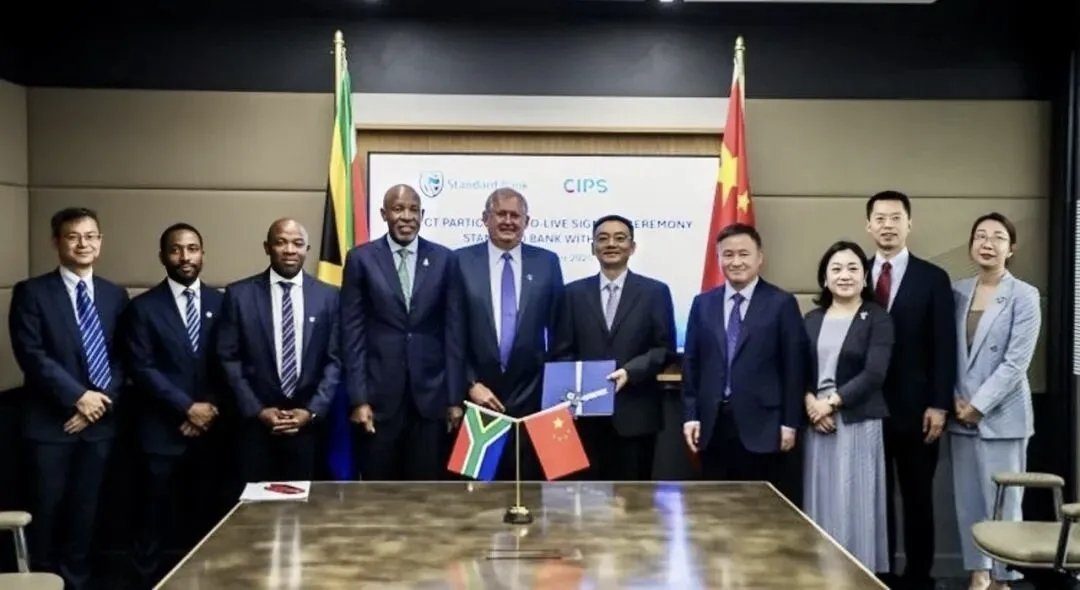
On December 9, South Africa’s Standard Bank officially activated the Cross-border Interbank Payment System (CIPS), becoming the first African bank to join the China-backed settlement system as a direct participant.
The importance of this milestone cannot be overestimated. CIPS allows for interbank payments between Africa and China using Chinese Renminbi (RMB) as the underpinning currency.
Access to CIPS will provide banks and financial institutions the ability to clear and settle cross-border payments without the need to use different currencies.
An advantage for China-Africa trade
The China-Africa trade relationship is one of the most resilient in the world. Growing from a humble $14 billion in 2000 to 296 billion in 2024, it is one of the most vibrant and robust trading relationships in the world.
While the growth is remarkable, China-Africa trade has always been settled in the dollar. At least the biggest percentage of it. According to the Standard Bank Trade Barometer 2024, 34% of African businesses now import from China. China is also Africa’s largest export market.
The arrival of CIPS removes any bottlenecks posed by the dollar to this important trade relationship. Dollar liquidity shortages, costly correspondent banking routes, and currency volatility regularly slow cross-border settlement. Payments will now clear in real time, cutting delays and helping businesses plan cash flow with greater certainty.
The CIPS milestone will enhance China-Africa cross-border payment efficiency, reduce transaction costs, and deepen economic cooperation.
CIPS, PAPSS and AfCFTA
The entry of CIPS comes just three years after the Afreximbank rolled out the Pan-African Payment and Settlement System (PAPSS), a groundbreaking initiative to revolutionize cross-border payments and boost intra-African trade.
PAPSS came for the reason as CIPS. To make cross border payments seamless, cheaper and currency friendly.
PAPSS is a key instrument for the implementation of the African Continental Free Trade Agreement (AfCFTA), an African Union initiative to increase intra-African trade, industrialization and growth.
Without PAPSS, African countries need a foreign currency – often the dollar – to trade with each other. This hurdle drains an estimated $5 billion annually in fees, delays, and opportunity costs, and undermines the competitiveness of African businesses, according to Afreximbank. It also slows progress toward realizing the AfCFTA).
PAPSS therefore is not just a payment system. Rather, it is a mechanism to enable African financial independence.
Both CIPS and PAPSS aim to reduce dependency on traditional western-dominated financial channels and currencies. By forging strategic synergy between CIPS and PAPSS, China and Africa can build a powerful financial corridor that bridges continents, champions local currency settlement, and reshapes the architecture of global trade.
De-risking payments, protecting sovereignty
For decades, SWIFT was seen as the norm for cross border payments. Countries trusted its neutrality and promise of security until some western countries decided to weaponize it. What was considered an international public good suddenly became a tool in the implementation of unilateral, often illegal sanctions against countries that dare to assert themselves.
CIPS therefore exists to democratize global trade by giving countries and businesses alternatives against the malicious weaponization of banking operations and currencies. It ensures reliability and safety of transactions.
As the global environment continues to remain volatile, countries will continue to look for solutions that offer security without trading their sovereignty. Trade wars and tariffs by those who seek domination and not fair competition are not helping the panic among Global South countries.
Faith in the western-dominated financial channels is falling fast and CIPS aligns with the aspiration of developing countries for a multipolar financial order.
Ronald Kato is an Associate Fellow at AfIBR

